
WhatsApp: +86 156 6573 6726
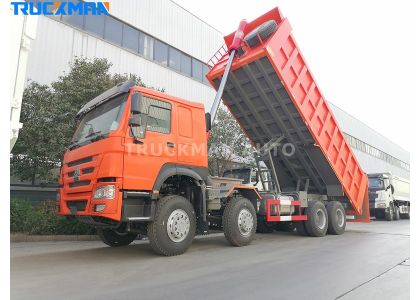
For dump trucks, the lifting system is very important, with it can greatly improve the transportation efficiency of the vehicle. For the hydraulic lifting system used in dump trucks, it usually consists of 5 parts, which are cylinder barrel and cylinder head, piston and piston rod, sealing device, buffer device, and exhaust device. Timely and effective maintenance can reduce the problems of the lifting system and improve the working efficiency and service life.
1. Adding Hydraulic Oil
Insufficient oil in the hydraulic cylinder will cause failed lifting of the dump truck cargo body and instability in the lifting process. Contaminated hydraulic oil will reduce the service life of hydraulic components. Raise the dump truck cargo body to the maximum angle. If the lifting falls below the maximum design angle, add oil through the filler in the top of the cylinder to keep it rising until reaching the maximum angle when the oil reaches the lower edge of the oil level plug hole.
Note: Excessive hydraulic oil in the cylinder will spill from the gear pump through the oil seal and damage the oil seal when the dump truck cargo body lands to the bottom. The normal oil level should be the same height with the oil level plug.
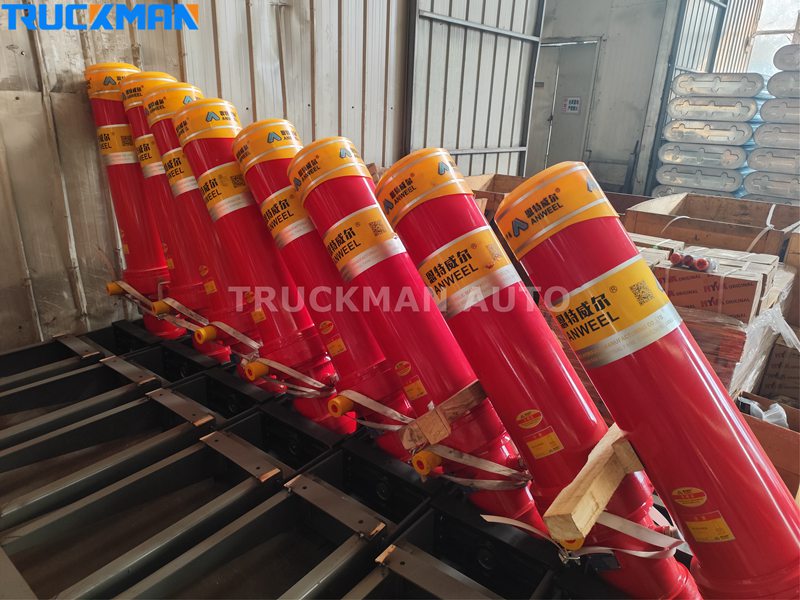
2. Replacing Hydraulic Oil
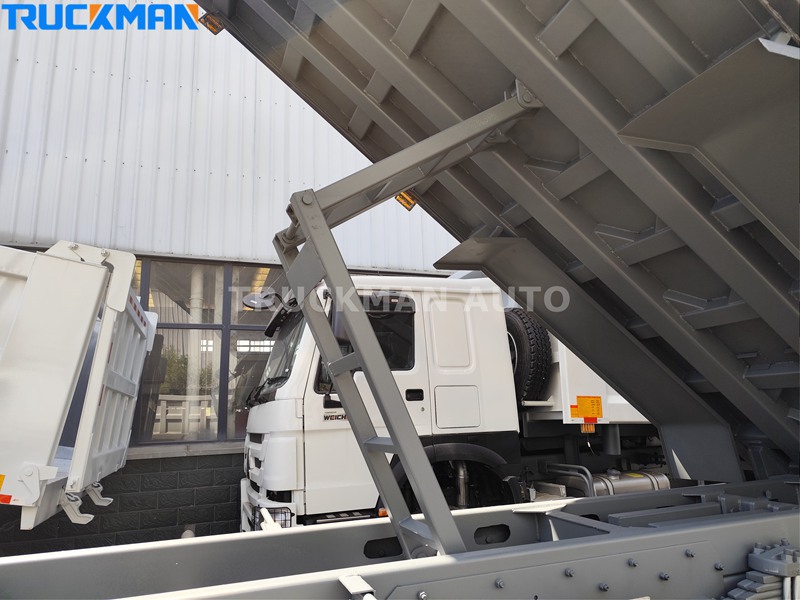
Raise the dump truck cargo body to the maximum angle and secure it with the auxiliary supporting bar. Place the distribution valve stem in the descending position using the rise-descent handle. Unscrew the oil filler plug on the cylinder and the low-pressure oil pipe connection on the distribution valve to discharge the oil in the upper part of the hydraulic cylinder. Loosen the bleeder screw on the cylinder to discharge the oil below the hydraulic cylinder piston.
Tighten the low-pressure oil pipe connection before adding oil through the filler in the cover of the cylinder. The pump should be running at low speed at this time and the rise-descend handle has made the distribution valve stem in the “descending”position. The oil keeps entering below the piston and refill slowly until lift flowing out through the bleed hole. Tighten the bleed plug and add oil to the required level.
Warning: The entire refill and output process shall proceed with an assistant holding the auxiliary supporting bar to ensure safety.
3. Bleeding of the Hydraulic Cylinder
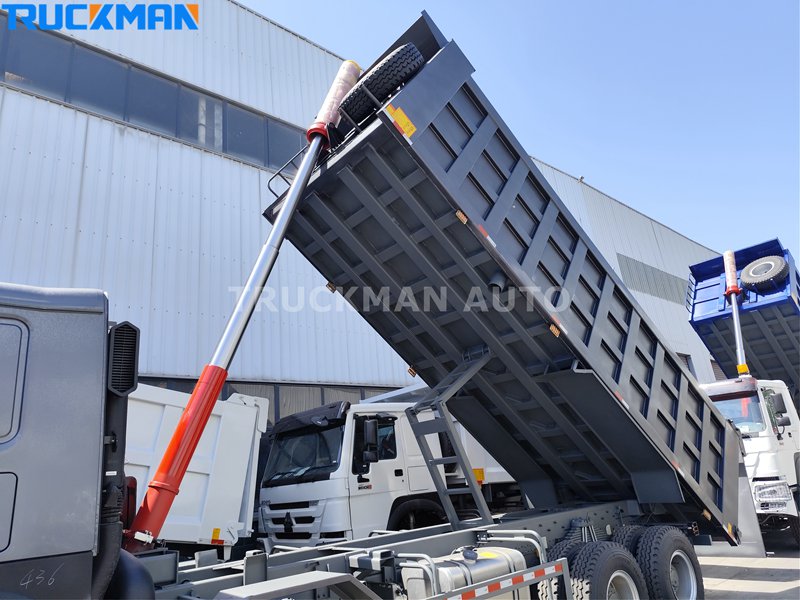
Raise the dump truck cargo body to the maximum angle and stop. Place the rise-descend handle on “suspend" and slightly loosen the bleed plug to discharge air. Quickly tighten the plug as soon as normal oil appears.
If the air and oil have been mixed into foams which flow out over a long time, the foregoing method does not apply in discharging the air. Instead, keep the dump body in the bleed position for an hour or longer for the air to separate from the mechanical oil before carrying out the bleeding process as mentioned above.
Note:
a. After the bleeding, check the oil level and refill if the oil is insufficient.
b. To prevent air infiltration, check the joints for oil leakage on a regular basis because air can infiltrate through the oil leak.
c. If the dumping cargo body still does not work after bleeding and adding oil to the sufficient amount, it is probably because the low-pressure pipe connection between the cylinder and the distribution valve is loose, leaking oil or taking in air.
JINAN TRUCKMAN AUTOMOBILE CO.,LTD. was located in Jinan city, Shandong province, established in year 2018. TRUCKMAN as China's top truck dealer was founded in 2010, the truck brands sold are SINOTRUK, SHACMAN, FOTON, BEIBEN etc famous brands, the products mainly cover heavy duty dump truck, heavy duty tractor truck, heavy duty cargo truck, water tanker truck, fuel tanker truck etc. Some special vehicles, e.g. garage trucks, sewage trucks, all-wheel drive truck, etc.


Scan the QR code and use WhatsApp to talk!

Contact Person: Eric GAO
WhatsApp: +86 15665736726
Tel & Fax: +86 531 8591 3883
E-mail: info@truckmanauto.com
Add: No.2566 Qizhou Road, Huaiyin District, Jinan 250000, China
